

Abraham Lincoln’s stovepipe hat is tilted slightly to the right. His long limbs mask his hunched shoulders and sunken chest. This 56-year-old president, aged beyond his years, wearily walks out of the White House, for the last time, towards his unknown fated destiny with John Wilkes Booth. The assassination of Abraham Lincoln actually happens off-screen in Lincoln, Steven Spielberg’s new bio-epic. History books have focused on Lincoln’s abolishment of slavery and his assassination through time, and Spielberg has chosen the former in this history lesson of a movie. He features the triumphant four months that led up to his untimely murder. Lincoln, the movie, is a celebration of America. It is a grandly nuanced glimpse of the United States’ early governing bodies and their momentous step forward towards hope, change and freedom.
As Abraham sees the Civil War winding down and perceives a distant victory on the horizon for the Union, he focuses on solving the even larger problem in America, which is slavery. His wisdom and foresight helps him seize a historic moment of leverage and he (and many others along the way) abolished slavery with the passing of the 13th Amendment.
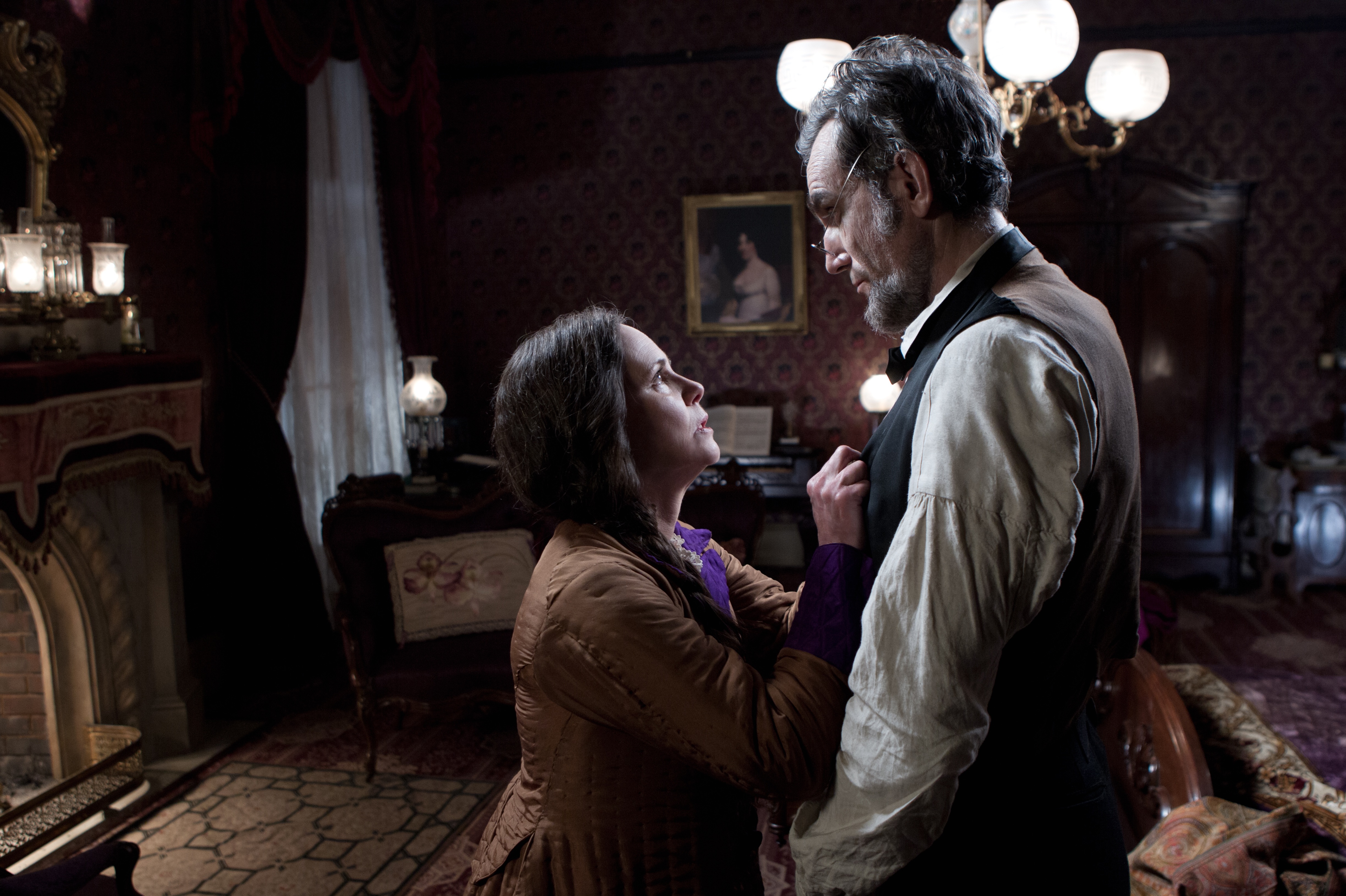
Daniel Day-Lewis, as Abraham Lincoln, shines among this predominantly male cast. From his shock of hair and craggily profile to the perfection of Lincoln’s mannerisms and higher-than-you’d-have-thought voice, Day-Lewis is the embodiment of Abraham. His carefully crafted voice commands respect with quiet authority. It is but one detail in this movie that will leave viewers in awe of his performance.
Sally Field plays Lincoln’s wife, Mary, a role she fought hard to get. Read the story on CBS Sunday morning’s website. She had to put on 20 pounds for the role. I never feel sorry for actors who do that, really.
Another cast member whose name may not stand out to a national audience, will stand out to loyal Denver theater-goers. Long-time Denver Center Theater Company actor, John Hutton, plays Senator Charles Sumner in Lincoln. It is great to see him on the big screen.
Scores of actors from modern day TV shows, films and cable programs show up throughout this movie. It is a veritable who’s who and watching history come alive along side these actors is riveting.

The movie is chockablock full of monologues, duologues and conversations. It can take a moment to tune in and fully comprehend all that is being said and left unsaid. In comparison, Abraham doesn’t move quickly and he doesn’t tell his entertaining stories quickly. The speakers in the House of Representatives rival this slow delivery. These orators are entertainers at heart, cajoling their comrades while tongue lashing any non-believers along the way. The scenes on the House floor create a nostalgic glimpse of our government’s early infancy and the spectacle that was…and probably still is.
Lincoln is an epic movie with a lot of ground to cover. Layers and layers of details fill each scene, and this history lesson, entrusted to Steven Spielberg, moves in symbiotic motion with Abraham. Slowly, deliberately and impressively. We will be seeing this movie all over the place come Oscar time. That’s a fine tip of the stove pipe hat to Mr. Lincoln’s legacy.

Comments
Very nice recap!
Pingback: Do You Know Grace Greenwood Bedell Billings ? « YouViewed/Editorial
Pingback: Lincoln (2012) « Hopped on Pop
Pingback: Lincoln and the Ratification of the 13th Amendment « The Visionary Film Fanatic
Pingback: That’s a Wrap! What Was In Good Taste in 2012? « In Good Taste Denver